Operational Protocol
Site Audit
Analysis of forage availability and pesticide risk zones within a 3km radius.
Bio-Asset Prep
Hives are pre-audited for queen vigor, brood density, and parasite-free status, matching strict WCBA standards.
Precision Placement
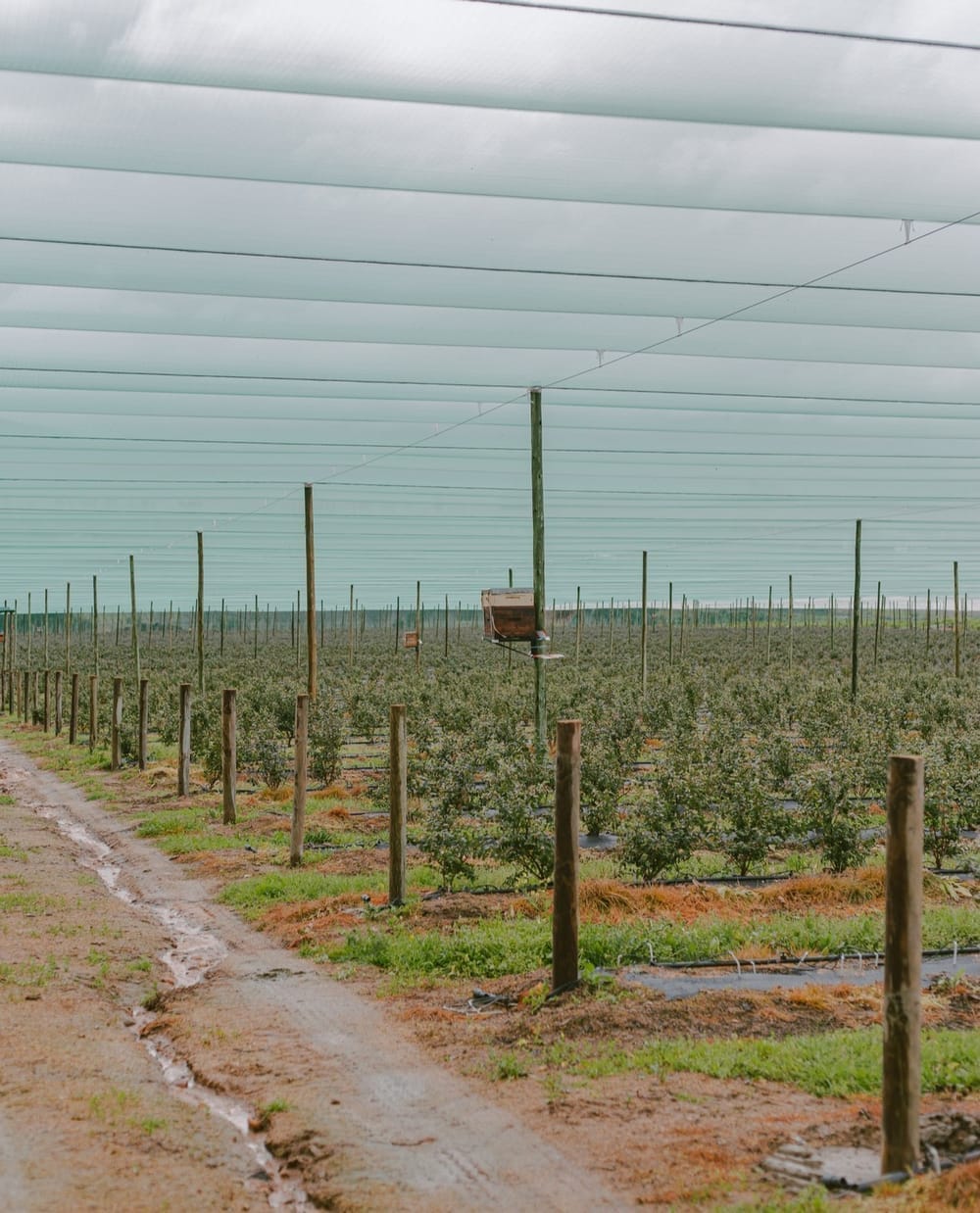
Night-time deployment using standardized hive configurations for minimal stress and maximum immediate impact.
Post-Bloom Retrieval
Night-time collection of hives as soon as crop pollination targets are met, carefully coordinated around post-bloom spray diaries.
Crops We Pollinate
We partner with commercial growers across the Western Cape to deliver precise, robust pollination services tailored to the specific bloom dynamics and biological requirements of each crop.
Statutory body for the South African deciduous fruit industry
Western Cape Bee Association colony strength & quality standards
Dept. of Agriculture, Land Reform & Rural Development — statutory registration
Aligned with South African agricultural best practice & food safety standards
Honeybee Pollination Services That Meet Hortgro Standards
Hortgro — South Africa's statutory body representing pome and stone fruit growers — recognises that managed honeybee pollination is critical to fruit set, fruit size, and export-grade yields across the Western Cape. Barben Bees delivers professional pollination services fully aligned with the Hortgro Bee & Pollination Charter and the Western Cape Bee Association (WCBA) colony strength standards, serving commercial orchards in Elgin, Grabouw, Ceres, the Koue Bokkeveld, Wolseley, Tulbagh, Groenland, and the Langkloof. Growers can calculate stocking density requirements and simulate flight paths using the Interactive Pollination Standards Manager Hub.
Why Hortgro Growers Specify Professional Beekeepers
The Hortgro Bee & Pollination Charter was established to protect the long-term viability of the Cape honeybee (Apis mellifera capensis) and to ensure commercial fruit growers receive consistent, verifiable pollination quality. Under the Charter, growers are encouraged to contract only DALRRD-registered beekeepers who supply hives meeting minimum WCBA colony strength requirements.
For apple and pear (pome fruit) pollination — where cross-pollination between cultivars is essential for commercial fruit set — placing the correct number of strong, foraging-ready hives at blossom is non-negotiable. The same applies to cherry, plum, peach, nectarine, and apricot (stone fruit) orchards, where blossom windows are short and weather conditions in the Western Cape can be unpredictable.
Barben Bees operates as a professional pollination contractor: every hive consignment is pre-audited for queen status, brood density, and Varroa mite levels before dispatch — and we provide growers with signed colony strength inspection reports on delivery.
of every consignment meets the WCBA Primary Bracket — minimum 8 frames covered in bees, 4 brood frames.
tolerance for AFB (American Foulbrood) — every hive is inspected and certified disease-free before delivery.
foraging target — hives deploy and begin active pollination within 24 hours under normal spring conditions.
DALRRD registered apiary — compliant with all South African statutory requirements for commercial pollination.
What the Hortgro Charter Means for Your Farm
The Hortgro Bee & Pollination Charter is a formal commitment between beekeepers and fruit growers to operate transparently, safely, and sustainably. When you engage Barben Bees as a Charter signatory, you receive a service governed by clear industry rules — not just goodwill.
In practical terms: your hives will be inspected before delivery, you will receive documentation confirming colony strength, and both you and your beekeeper sign off on a written agreement. The Charter also establishes a clear pesticide communication protocol, protecting both your crop and your contractor's bees.
Hortgro Bee & Pollination Charter Signatory
We operate as active signatories of the Hortgro Bee & Pollination Charter — the statutory industry agreement between South African deciduous fruit growers and registered beekeepers to protect bee health and standardise pollination quality.
Pesticide & Spray Diary Coordination
Hortgro and the WCBA both emphasise that pesticide exposure is the leading cause of managed honeybee colony loss in orchards. We proactively coordinate with farm managers on spray diaries, ensuring hives are never in the orchard during or immediately after chemical applications.
Written Pollination Contracts (SLAs)
Following Hortgro's formal recommendation that all pollination services be governed by a written contract, Barben Bees provides Service Level Agreements specifying hive count, colony strength, delivery date, placement map, and retrieval schedule — protecting both the grower and the beekeeper.
Pollination Services in the Western Cape — What Growers Ask
Pollination Season Calendar
Blossom timing varies by crop, elevation, and microclimate. The Koue Bokkeveld blooms up to 3 weeks earlier than Elgin for the same cultivar. Book your hives before the season opens — demand is highest for almonds, cherries, and early apple cultivars.
| Crop | Jun | Jul | Aug | Sep | Oct | Nov | Dec | Jan | Feb |
|---|---|---|---|---|---|---|---|---|---|
Almonds Swartland / Agter-Paarl | |||||||||
Cherries Ceres / Koue Bokkeveld | |||||||||
Plums & Peaches Langkloof / Wolseley | |||||||||
Apples (early) Koue Bokkeveld / Ceres | |||||||||
Apples & Pears Elgin / Grabouw / Groenland | |||||||||
Pears (late) Langkloof | |||||||||
Blueberries Western Cape |
WCBA Pollination Standards
We adhere strictly to the Western Cape Bee Association (WCBA) Pollination Standards for 2024. Every consignment is audited to guarantee strength, hive quality, and health.
01. Colony Strength Standards
Consignment RatioColonies in any consignment are audited and split into two performance brackets to ensure balanced pollination coverage:
Primary Bracket (At least 90% of consignment):
- • Min. 4 deep brood frames (at least 75% brood cover per frame)
- • Min. 8 deep brood frames covered in bees in calmed condition
- • Max. 3 deep frames of stored honey
- • Max. 2 deep frames of stored pollen
- • Max. 3 frames of honey in a super (if present)
Secondary Bracket (No more than 10% of consignment):
- • Min. 3 deep brood frames (at least 75% brood cover per frame)
- • Min. 6 deep brood frames covered in bees in calmed condition
- • Max. 3 deep frames of stored honey
- • Max. 2 deep frames of stored pollen
- • Max. 3 frames of honey in a super (if present)
02. Queen Status
High-performance pollination requires active colony reproduction and brood rearing:
- a. The hive must be completely queen-right.
- b. The queen must be actively laying, demonstrating a normal brood pattern with a balanced distribution of eggs, larvae, and sealed brood.
03. Disease & Parasite Thresholds
Colonies must be healthy and properly managed, adhering to strict biological safety limits:
- a. Zero tolerance for clinical symptoms of AFB (American Foulbrood) or dried remains of dead brood.
- b. Maximum 50 cells with European Foulbrood (EFB) permissible.
- c. Maximum 50 cells with chalkbrood permissible.
- d. Maximum 50 small hive beetles present in the colony.
- e. Varroa mite counts must not exceed 5 mites per 100 adult bees.
04. The Pollination Beehive
Hives must meet standardized structural rules to ensure transportability and accessibility:
- a. Standard Langstroth-type beehive with at least 10 individually removable deep frames.
- b. All frames must be properly reinforced to prevent comb collapse during transport.
- c. Optional honey super allowed, with no fewer than 9 individually removable super frames.
- d. The DALRRD registration number must be clearly visible on all hives.
05. Leakproof Sealing
Safety during transport and delivery is paramount to protect farm workers and the public:
- a. The construction and condition of the hive must allow it to be sealed easily and quickly.
- b. Colonies must remain sealed during delivery, transport, or collection, ensuring few to no bees escape.
06. Ventilation & Acclimatization
Ensuring post-transport survival and immediate biological function of the colony:
- a. Hive configuration and closing mechanisms must facilitate sufficient ventilation to the bees and brood at all times and prevent overheating or suffocation during transport.
- b. The colony should forage normally within 24 hours after delivery during normal, dry, and mild weather (above 17 degrees C).
- c. There are few to no dead or dying bees seen in front of the hives.
Ready for Deployment?
Work with an experienced Western Cape beekeeping operation built around healthy colonies and reliable results.
Initiate Contact